Corporate town halls and internal events: How to connect with your workforce and strengthen company culture
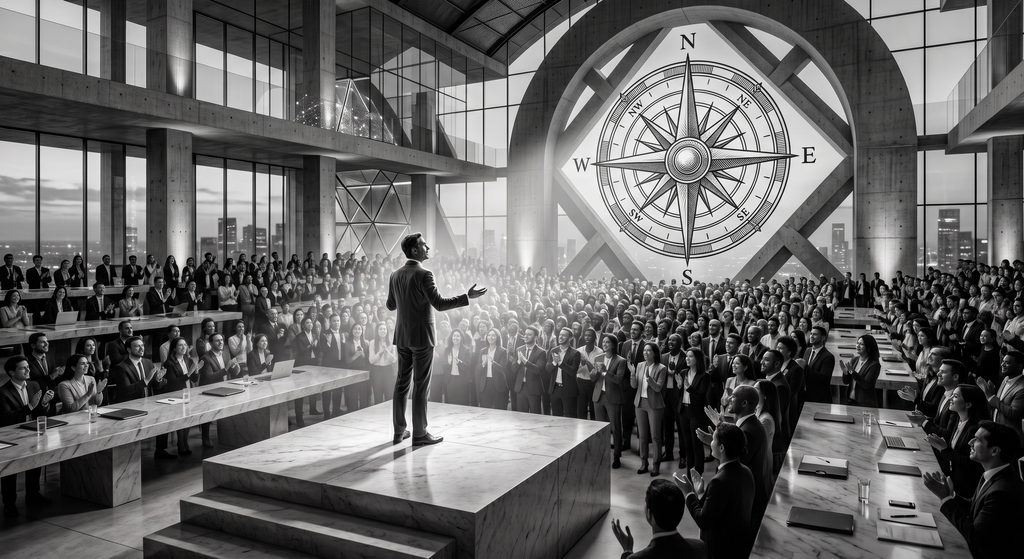
In an era defined by geographic dispersion, hybrid work models, and accelerating strategic shifts, maintaining a cohesive and aligned corporate culture has become one of senior management’s greatest challenges. As organisations expand or navigate transformation processes, the risk grows exponentially that employees perceive a disconnect between Executive Board decisions and their daily operational reality.
To bridge this gap and build an engaged corporate community, Town Halls (all-hands meetings) and internal corporate events have established themselves as indispensable leadership tools. However, a vast divide exists between a routine all-hands meeting—characterised by monotonous slide decks and a passive audience—and an inspiring, transparent connection experience capable of renewing organizational pride and belonging.
Transforming an internal event into a cultural catalyst requires moving beyond traditional top-down announcements to design sessions focused on engagement, strategic clarity, and genuine two-way dialogue.
Below, we examine key methodological strategies to structure high-impact Town Halls and corporate events that genuinely connect with people and reinforce core company values.
What is a Town Hall and what is its strategic role in business?
The term Town Hall originates from North American civic assemblies where local residents met public representatives to debate community affairs. Adapted to the corporate world, a Town Hall is a regular gathering bringing together the entire workforce with the executive leadership team.
Unlike one-way email announcements or internal press releases, a Town Hall provides a real-time, safe environment where senior leadership can go beyond broadcasting goals: they can humanise strategy, address employee concerns, and celebrate collective achievements.
The 3 core objectives of a strategic Town Hall
| Strategic objective | Execution mechanism | Organisational impact |
| 1. Strategic Alignment | Explaining business direction, financial results, and quarterly priorities in clear, accessible language. | Connects daily tasks directly to overarching corporate goals, removing operational ambiguity. |
| 2. Transparency & Trust | Hosting open, unfiltered Q&A sessions addressing complex or sensitive topics. | Dismantles internal rumour mills, lowers change anxiety, and consolidates leadership credibility. |
| 3. Cultural Reinforcement & Recognition | Celebrating shared milestones, highlighting success stories, and publicly recognising team talent. | Elevates engagement and belonging, reinforces corporate values, and motivates the workforce. |
Deep-dive into the core pillars
- Strategic Alignment (“Where we are going”): Most operational friction occurs when employees do not understand the “why” behind executive decisions. A Town Hall contextualises financial data and market shifts, translating high-level strategy into clear objectives for every department.
- Transparency and Trust (“Talking about what matters”): Trust is built not when everything is running smoothly, but when challenges and uncertainties are addressed with honesty. An effective Town Hall reserves quality time to answer genuine workforce concerns regarding restructuring, remote work policies, or market targets.
- Cultural Reinforcement (“Who we are and what we celebrate”): Company values are not decorative wall slogans; they are observable behaviours. Using the Town Hall stage to highlight innovative employee projects or recognise conduct aligned with corporate culture is the single most powerful way to anchor company identity.
The 4 errors that turn internal events into tedious experiences
To revitalize internal communication events, organisations must eradicate common methodological habits that undermine workforce engagement:
1. One-way communication and lack of interaction
The most widespread mistake is structuring the event as an executive monologue. If the session consists of an endless succession of slides read verbatim by leadership without room for active participation, the audience quickly disengages and perceives the meeting as a waste of time.
2. Excessive abstract jargon and context-free metrics
Presenting spreadsheets and complex financial metrics without explaining what they mean for the employee’s daily work creates detachment. The workforce needs to understand how individual contributions impact the overarching purpose of the business.
3. Avoiding tough questions
Over-filtering employee queries or offering evasive answers when addressing sensitive topics destroys trust in senior management. Transparency and honesty form the foundation of executive credibility.
4. Neglecting production quality and staging
A corporate event reflects company values. Poor audio-visual execution, technical glitches, or a dull format send an implicit message of disregard for the team, negatively impacting employer brand perception.
Key steps to design high-impact Town Halls and internal events
Overcoming meeting monotony requires blending event design, corporate storytelling, and participatory facilitation:
1. Build a narrative narrative thread (Storytelling)
An internal event is not a live financial report; it is an opportunity to tell the story of the company during that quarter or year. Structure the event around an inspiring central theme linking past achievements, present challenges, and future opportunities, drawing on real employee testimonials from across departments to enrich the narrative.
2. Guarantee genuine two-way dialogue (Open Q&A)
Reserve at least 30% of total event time for a live Q&A session. Utilise interactive event technology allowing employees to submit questions anonymously or vote on top concerns before and during the session. When the CEO and leadership team respond authentically to difficult questions, organizational trust multiplies.
3. Professional dynamic facilitation
To ensure a smooth, energetic pace free from hierarchical bias, engaging an expert external facilitator is highly recommended. A professional moderator keeps energy levels high, manages time limits, smoothly navigates transitions, and creates an approachable atmosphere that encourages participation.
4. Explicit recognition and talent celebration
Use the Town Hall platform to showcase and celebrate team successes. Publicly acknowledging effort, innovation, and behaviours that embody corporate values strengthens organizational culture and generates a lasting emotional boost across the workforce.
Comparative breakdown: Traditional all-hands vs. High-impact Town Hall
| Dimension | Traditional all-hands meeting | High-impact Town Hall (Skills Academy) |
| Structure | One-way (Consecutive executive presentations). | Dynamic and interactive (Storytelling + Dialogue + Recognition). |
| Q&A format | Non-existent or rushed at the end without dedicated time. | Live, voted-on open Q&A integrated into the main agenda. |
| Content focus | Cold financial data and dense technical slides. | Purpose, human impact, real challenges, and shared milestones. |
| Workforce role | Passive spectators. | Active participants driving the conversation. |
| Post-event outcome | Indifference and a feeling of routine obligation. | Alignment, pride of belonging, and strategic clarity. |
Hybrid formats: Connecting remote and distributed teams
In multi-site organisations or hybrid work models, the challenge lies in ensuring the experience is equally engaging for in-person attendees and remote participants.
To achieve a balanced hybrid event:
- Avoid the “television screen” approach: Do not simply broadcast a room camera feed. Design production with the remote viewer in mind, using dynamic camera switches and agile pacing.
- Equal participation opportunities: Prioritise questions and input from remote team members via dedicated moderators so they never feel like second-class attendees.
- Post-event highlights: Record and edit key event highlights to share across the organization, reinforcing core messages for those unable to join live.
The strategic ROI of investing in internal communication
Investing in the quality of Town Halls and internal corporate events is far more than a logistical detail; it is one of the most profitable decisions for organizational health. A workforce that understands its company’s vision, trusts its leaders, and feels its work is valued executes faster, adapts better to change, and demonstrates superior commitment to business results.
Designing memorable internal communication experiences is the path to transforming a fragmented workforce into a cohesive, aligned community prepared to achieve any corporate goal.
Looking to transform your company’s internal communications and events?
At Skills Academy, we deliver narrative design, dynamic moderation, and methodological facilitation for your Town Halls and internal corporate events, creating experiences that inspire and reinforce your organizational culture.
Contact our team today to request a complimentary diagnostic session and connect with your team.